Introduction
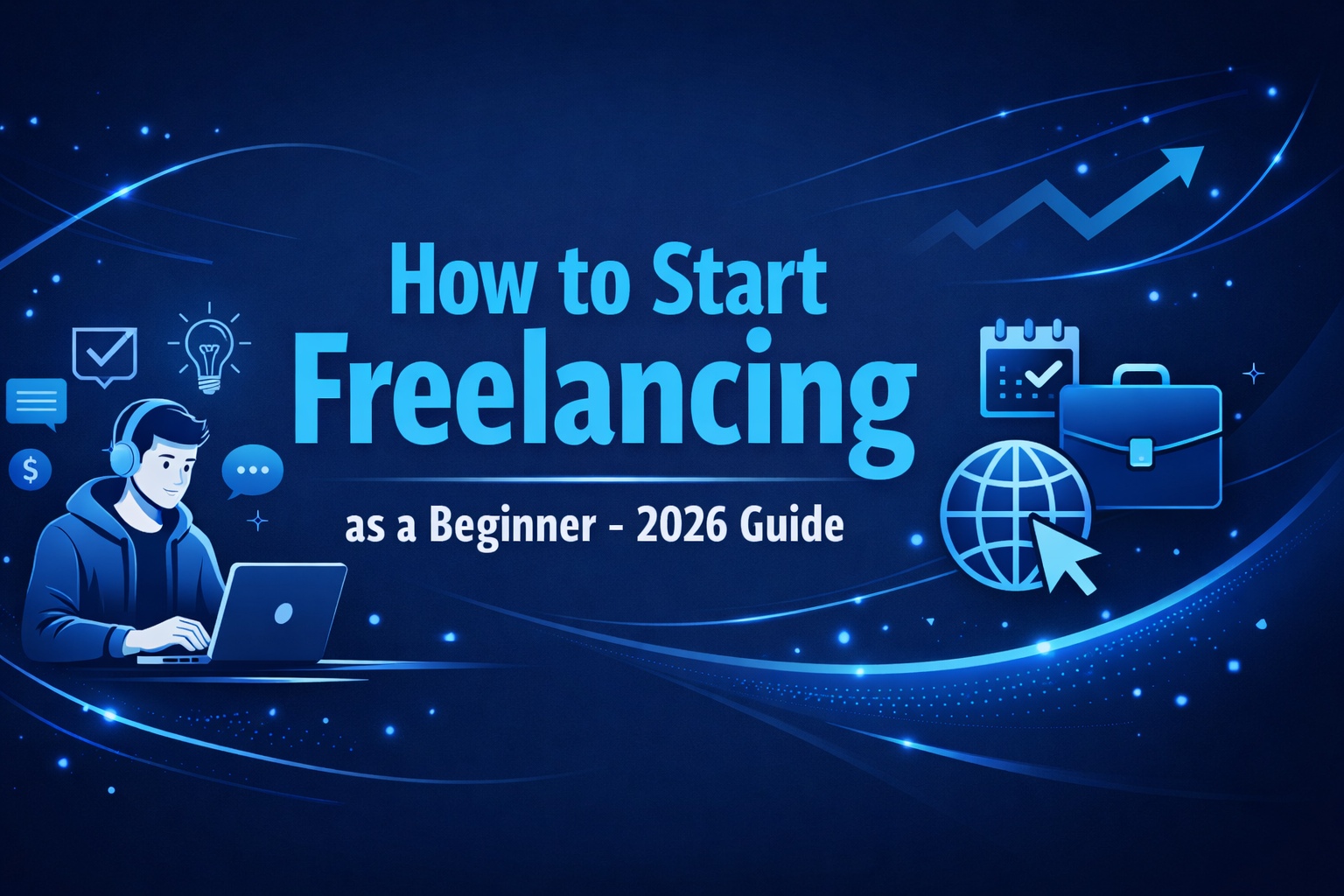
Freelancing offers flexibility, independence, and income opportunities, making it a popular choice in 2026. Whether you are a student, professional, or aspiring entrepreneur, learning how to start freelancing as a beginner can help you earn while building skills.
This guide provides step-by-step instructions, tips, and strategies for beginners to start freelancing successfully.
Why Freelancing Is a Great Option
- Flexible Work Hours: Work according to your schedule
- Diverse Opportunities: Freelance in web development, content writing, AI tools, marketing, and more
- Global Clients: Work for clients worldwide from anywhere
- Skill Development: Gain practical experience and improve skills
- Entrepreneurial Growth: Freelancing can evolve into your own business
📌 Image suggestion: Freelancer working on a laptop with a coffee mug
Step 1: Identify Your Skills
Before starting, identify the skills you can offer as a freelancer:
- Digital Skills: Web development, graphic design, digital marketing, AI tools
- Writing Skills: Blogging, content writing, copywriting, SEO
- Technical Skills: Programming, data analysis, app development
- Creative Skills: Photography, video editing, animation, UX/UI design
- Other Skills: Translation, virtual assistance, customer support
💡 Tip: Focus on one skill initially and gradually expand your offerings.
📌 Internal link suggestion: Link to [Top Tech Skills to Learn in 2026]
Step 2: Choose a Freelancing Platform
Freelancing platforms help beginners find clients and projects easily:
- Upwork: Popular for web development, writing, and digital marketing
- Fiverr: Offer microservices with defined packages
- Freelancer.com: Connects with global clients for diverse projects
- Toptal: For skilled professionals in tech, design, and finance
- LinkedIn: Build a professional profile and network
💡 Tip: Start with 1–2 platforms to avoid spreading yourself too thin.
Step 3: Build a Strong Profile
Your freelancing profile is your first impression. Include:
- Professional Profile Picture – Clear and approachable
- Compelling Bio – Highlight your skills and value proposition
- Portfolio – Showcase previous work or sample projects
- Skills and Certifications – List relevant skills and certifications
- Client Reviews – Start small to gather testimonials
💡 Tip: Make your profile specific to the niche you’re targeting.
Step 4: Start Small & Build Reputation
- Take smaller projects initially to build trust
- Deliver high-quality work on time
- Communicate professionally with clients
- Request reviews and testimonials after successful projects
💡 Tip: Reputation matters more than quick earnings for beginners.
Step 5: Set Pricing & Packages
- Research market rates on your chosen platform
- Start with competitive but fair pricing
- Offer tiered packages for services
- Gradually increase rates as your portfolio grows
💡 Tip: Avoid undervaluing your skills; quality work justifies higher rates.
Step 6: Market Yourself
Even on platforms, marketing your freelance services helps:
- Share your work on social media (LinkedIn, Instagram, Twitter)
- Create a personal website or portfolio
- Engage in communities and forums in your niche
- Network with potential clients and collaborators
📌 Internal link suggestion: Link to [Free AI Tools for Small Businesses] for marketing assistance
Step 7: Manage Time & Productivity
- Set a daily and weekly schedule for client work
- Use project management tools like Trello, Notion, or Asana
- Track time and billing using tools like Toggl or Clockify
- Avoid burnout by balancing work and breaks
💡 Tip: Treat freelancing as a professional business, not a hobby.
Step 8: Upskill Continuously
- Learn new tools, trends, and skills in your field
- Take certifications to boost credibility
- Stay updated with industry trends (AI, digital marketing, programming)
- Expand services to increase income opportunities
📌 Internal link suggestion: Link to [AI Skills That Will Be in Demand]
Common Mistakes Beginners Make
- Applying to too many projects without focus
- Accepting low-paying work without building skills
- Ignoring client communication and feedback
- Not maintaining a portfolio or tracking performance
- Neglecting contracts and terms of service
Benefits of Freelancing for Beginners
- Flexibility: Choose projects and hours
- Skill Growth: Learn while earning
- Income Potential: Scale as experience grows
- Global Exposure: Work with international clients
- Entrepreneurship: Develop business and negotiation skills
Key Takeaways
- Freelancing offers a flexible, rewarding, and skill-building career path
- Start with one skill, build a portfolio, and deliver quality work
- Use freelance platforms to find projects and grow reputation
- Market yourself and continuously upskill to remain competitive
Treat freelancing as a professional business, not just a side hustle