Introduction
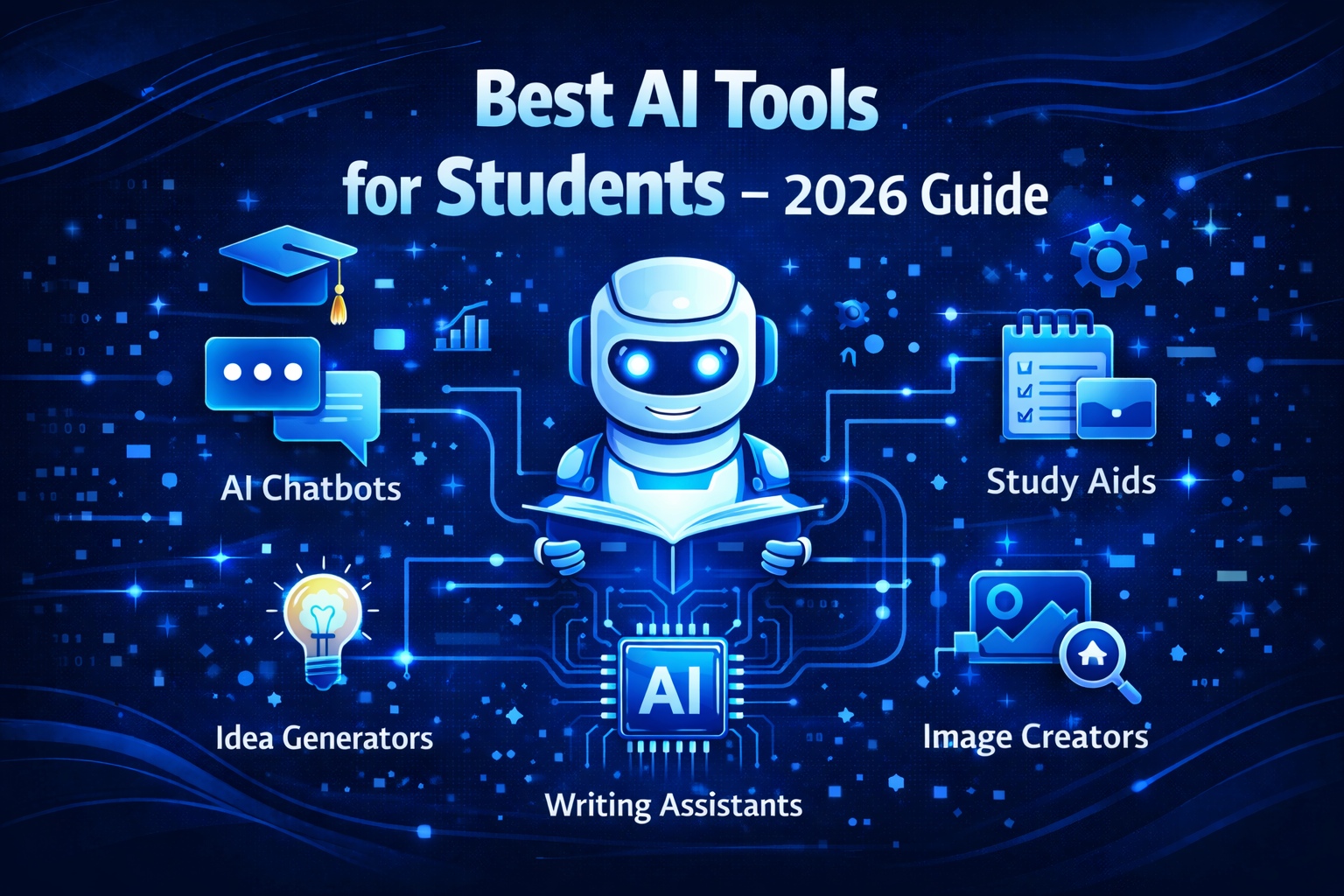
Artificial Intelligence (AI) is transforming education in 2026, making learning faster, smarter, and more interactive. Students can now use AI tools for research, writing, coding, problem-solving, and productivity.
This guide highlights the best AI tools for students, their applications, and tips for using them effectively to improve learning outcomes.
Why Students Should Use AI Tools
- Time-Saving: Automates research, writing, and repetitive tasks
- Enhanced Learning: Provides personalized explanations and examples
- Creativity Boost: Helps generate ideas and content quickly
- Skill Development: Improves coding, writing, and analytical skills
- Accessible Learning: AI tools are available 24/7 for students worldwide
📌 Image suggestion: Illustration of students using AI tools on laptops/tablets
Top AI Tools for Students
1️⃣ ChatGPT
- Use: Answer questions, generate study notes, draft essays, and coding help
- Benefits: Quick explanations, creative content generation, homework assistance
- Tip: Use responsibly; always verify AI-generated information
2️⃣ Grammarly
- Use: Writing assistant for grammar, style, and plagiarism check
- Benefits: Improves essays, assignments, and email writing
- Tip: Combine with ChatGPT for content drafting
3️⃣ Quizlet
- Use: AI-powered flashcards and study sets
- Benefits: Memorization and exam preparation made easy
- Tip: Create custom AI-based quizzes for self-assessment
4️⃣ Canva AI
- Use: Graphic design, presentations, infographics
- Benefits: Visual content creation for projects and assignments
- Tip: Use templates and AI text-to-image features for fast design
5️⃣ Notion AI
- Use: Note-taking, project planning, task management
- Benefits: Organizes study material efficiently
- Tip: Use AI summarization for lengthy notes
6️⃣ Google AI Tools
- Use: Google Lens (scan & recognize text/images), AI-assisted Google Docs
- Benefits: Fast research, translation, and document drafting
- Tip: Combine tools for multi-tasking
7️⃣ Replit AI
- Use: Coding, debugging, and learning programming
- Benefits: Generates code snippets and explanations
- Tip: Ideal for students learning Python, JavaScript, and web development
8️⃣ Khan Academy + AI
- Use: AI-powered learning recommendations
- Benefits: Personalized learning paths, tutorials, and practice exercises
- Tip: Track progress and focus on weak areas
9️⃣ Wolfram Alpha
- Use: AI-based math, science, and data problem-solving
- Benefits: Step-by-step solutions for complex problems
- Tip: Great for STEM students
10️⃣ Jasper AI
- Use: Content creation, brainstorming, research summaries
- Benefits: Write essays, presentations, and creative projects efficiently
- Tip: Combine with Grammarly for error-free content
📌 Internal link suggestion: Link to [What Is Artificial Intelligence in Simple Words]
Tips for Students Using AI Tools
- Verify Information: AI can make mistakes; cross-check with trusted sources
- Use AI Ethically: Avoid plagiarism and maintain academic integrity
- Combine Tools: Use multiple AI tools for writing, research, and coding
- Practice Critical Thinking: Don’t rely solely on AI; understand concepts
- Manage Time: Use AI to save time but not procrastinate
Benefits of AI Tools in Education
- Efficiency: Automates repetitive tasks, notes, and research
- Personalized Learning: Adapts to each student’s pace and understanding
- Improved Creativity: Generates ideas and content quickly
- Better Collaboration: AI-assisted tools help group projects and teamwork
- Skill Enhancement: Coding, writing, and analytical thinking improve faster
📌 Image suggestion: Students collaborating using AI tools on a project
Common Mistakes Students Make
- Over-reliance on AI without understanding concepts
- Copying AI-generated content directly without verification
- Using AI only for assignments and not learning
- Ignoring productivity and organization features of AI tools
Avoid these mistakes to maximize learning and skill development.
Key Takeaways
- AI tools help students learn smarter, save time, and enhance productivity
- Top AI tools: ChatGPT, Grammarly, Canva AI, Notion AI, Replit, Khan Academy AI, Wolfram Alpha
- Combine multiple tools for research, writing, coding, and learning
- Use AI ethically and verify all generated content
Continuous practice and understanding concepts remain essential