Introduction
Web development is often divided into two main parts: frontend and backend. These two roles work together to create functional, interactive websites and applications.
Beginners often ask:
- What is the difference between frontend and backend?
- Which one should I learn first?
- What skills and tools are required?
This guide will answer all these questions, provide career insights, and help you choose the right path in 2026.
What Is Frontend Development?
Frontend development deals with everything a user sees and interacts with on a website.
Key Responsibilities
- Designing the user interface (UI)
- Creating navigation menus, buttons, and forms
- Ensuring responsive design for desktop, tablet, and mobile
- Implementing animations and interactivity
Core Technologies
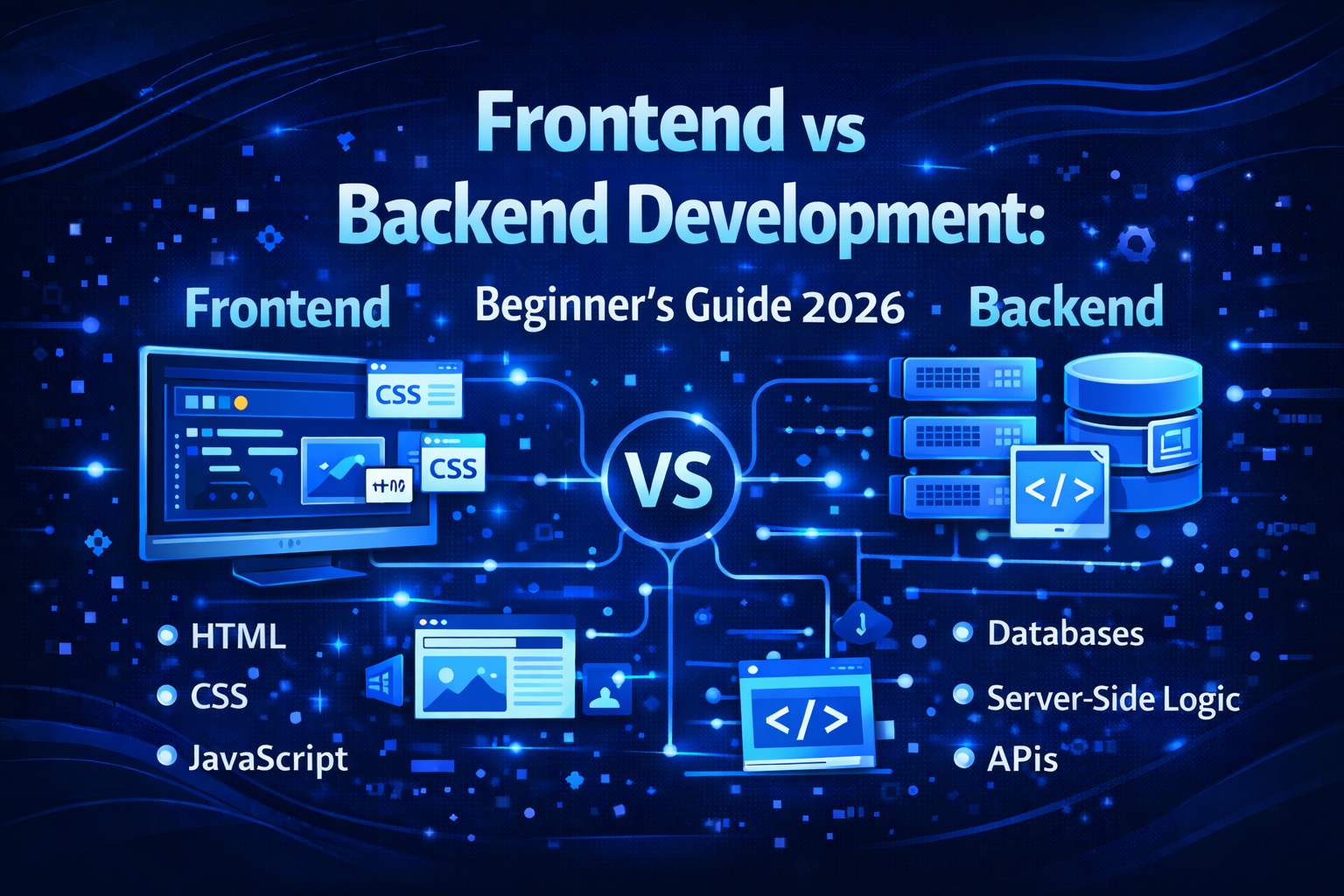
- HTML – Structure of the webpage
- CSS – Styling and layout
- JavaScript – Interactivity and dynamic behavior
- Frameworks/Libraries: React.js, Angular, Vue.js
📌 Image suggestion: Screenshot of a frontend website layout
Frontend Developer Skills
- HTML, CSS, JavaScript (core fundamentals)
- Knowledge of responsive design
- Familiarity with frontend frameworks
- Basic graphic design skills
- Version control using Git and GitHub
Career Opportunities
- Frontend Developer
- UI/UX Designer (technical focus)
- Freelance Frontend Developer
💡 Salary (India approx.): ₹3–6 LPA for beginners, ₹8–15 LPA experienced
📌 Internal link suggestion: Link to [HTML vs CSS vs JavaScript – Beginner’s Guide]
What Is Backend Development?
Backend development focuses on the server-side logic that users do not see. It powers the frontend and handles data processing, storage, and security.
Key Responsibilities
- Handling databases and server requests
- Authenticating users and managing sessions
- Processing forms and transactions
- Ensuring website speed, reliability, and security
Core Technologies
- Programming languages: PHP, Python, Node.js, Java
- Databases: MySQL, PostgreSQL, MongoDB
- API development and integration
📌 Image suggestion: Diagram showing frontend requests handled by backend
Backend Developer Skills
- Server-side programming (Node.js, Python, PHP)
- Database management (SQL, NoSQL)
- Understanding of RESTful APIs and web services
- Version control (Git/GitHub)
- Security best practices
Career Opportunities
- Backend Developer
- API Developer
- Full-Stack Developer (if combined with frontend skills)
💡 Salary (India approx.): ₹4–7 LPA beginners, ₹10–20 LPA experienced
📌 Internal link suggestion: Link to [How to Become a Web Developer in 2026 – Roadmap]
Frontend vs Backend: Comparison Table
| Feature | Frontend Development | Backend Development |
| Focus | User interface & experience | Server, database, logic |
| Languages | HTML, CSS, JavaScript | PHP, Python, Node.js, Java |
| Tools | VS Code, Figma, Chrome DevTools | VS Code, Postman, Database tools |
| Interactivity | Directly interacts with users | Handles requests & data processing |
| Career Path | Frontend Developer, UI Designer | Backend Developer, API Developer |
| Learning Curve | Easier for beginners | Medium, requires logical thinking |
Full-Stack Development: Combining Both
A full-stack developer knows both frontend and backend:
- Can build complete websites or web apps
- Understands UI/UX and server logic
- Highly sought after by employers and clients
💡 Image suggestion: Full-stack development workflow diagram
Which Should You Learn First?
- Beginners: Start with frontend
- Easier to see results visually
- HTML + CSS + JavaScript fundamentals
- Easier to see results visually
- After frontend: Learn backend
- Server-side programming and database skills
- Server-side programming and database skills
This approach builds strong fundamentals and makes full-stack learning easier.
Essential Tools for Both Frontend & Backend
- Code Editors: VS Code, Sublime Text
- Version Control: Git + GitHub
- Design & Prototyping: Figma, Canva
- Testing & Debugging: Chrome DevTools, Postman
- Deployment: GitHub Pages, Netlify, Vercel
📌 Internal link suggestion: Link to [Best Free Tools for Web Developers]
Career Scope in 2026
Both frontend and backend development have excellent career opportunities:
- Frontend: Focus on user experience, UI/UX, interactive websites
- Backend: Focus on server logic, databases, APIs, performance
- Full-Stack: Combines both, most in-demand globally
Freelancing opportunities exist for all three paths. Building a portfolio website is essential.
Final Thoughts
Understanding the difference between frontend and backend development is the first step in becoming a web developer in 2026.
- Frontend = user-facing, visual, interactive
- Backend = server-side, data-driven, logical
Start with frontend basics, then gradually learn backend skills. Eventually, you can become a full-stack developer and unlock even more career opportunities.